

Latest
Story
12 December 2025
The World Faces Growing Thirst: Water Use Rises as Resources Shrink
Learn more
Press Release
09 December 2025
Seven in ten women human rights defenders, activists and journalists report online violence
Learn more
Video
02 December 2025
Online sexual harasment
Learn more
Latest
The Sustainable Development Goals in Türkiye
The Sustainable Development Goals are a global call to action to end poverty, protect the earth’s environment and climate, and ensure that people everywhere can enjoy peace and prosperity. These are the goals the UN is working on in Türkiye:
Story
22 October 2025
The United Nations at 80: Türkiye’s Enduring Support for Multilateralism Highlighted at High-Level Panel
The United Nations in Türkiye convened a high-level panel discussion titled “The United Nations at 80: How Türkiye’s Support for the UN and Multilateralism Advances Global Peace and Development” to mark the 80th anniversary of the Organization and reaffirm Türkiye’s commitment to global cooperation and sustainable development.The panel moderated by Yasser Hassan, Director of the ILO Office for Türkiye featured Dr. Babatunde Ahonsi, UN Resident Coordinator in Türkiye; Ambassador Zeki Levent Gümrükçü, Deputy Minister of Foreign Affairs; Dr. Rahman Nurdun, Vice President of the Turkish Cooperation and Coordination Agency (TİKA); and Ms. Hilal Gedik, Youth Representative and President of the Capital Youth Assembly.The event brought together nearly 200 participants, including senior representatives from the Government of Türkiye, the diplomatic community, international institutions, academia, the private sector, UN Country Team members, UN staff, civil society, and youth.The panel aimed to reflect on the enduring relevance of the United Nations at 80, examine how renewed commitment to multilateralism can address emerging global challenges, and showcase examples of successful cooperation between Türkiye and the UN. It also provided a platform for youth voices and new perspectives on the future of global cooperation. Opening the event, UN Resident Coordinator Dr. Babatunde Ahonsi recalled the founding moment of the United Nations:“Eighty years ago, in a world scarred by war, leaders made a choice: cooperation over chaos, law over lawlessness, peace over conflict. That choice gave birth to the United Nations—not as a dream of perfection, but as a strategy for survival.”Dr. Ahonsi underlined that the UN, at its best, is “a bridge connecting people, ideas, and generations in pursuit of common goals,” adding that the commemoration of UN80 is both a celebration of past achievements and a moment to renew the Organization’s promise for future generations.He highlighted Türkiye’s role as a founding member of the UN and a strong supporter of multilateralism since 1945. From hosting the United Nations Technology Bank for Least Developed Countries to its leadership in humanitarian response and regional peace efforts, Türkiye continues to exemplify how international cooperation translates into tangible progress.The discussion, focused on how renewed global solidarity can help address today’s crises — from conflicts and climate change to technological disruption and inequality. Moderator of the panel Hassan, highlighted the continued importance of collective action in addressing global challenges. “If we put things together, there seems to be a meaningful answer,” said Hassan. “The question is whether multilateralism and international cooperation are the preferred options for addressing the global challenges ahead of us. The answer is yes.” Ambassador Levent Gümrükçü, Deputy Minister of Foreign Affairs, reaffirmed Türkiye’s long-standing commitment to the United Nations and multilateralism as central pillars of its foreign policy. He noted that the UN, as the most inclusive and legitimate platform for global dialogue, continues to play a vital role in addressing today’s complex and interconnected challenges.Ambassador Gümrükçü underlined that Türkiye’s approach to foreign policy has always been grounded in dialogue, cooperation, and respect for international law — principles that lie at the heart of the UN Charter. He pointed out that global crises such as climate change, food insecurity, and humanitarian emergencies demonstrate that no country can act alone and that strengthening multilateral institutions remains essential for collective progress.“Türkiye believes that global challenges require global solutions,” he said. “Our partnership with the United Nations is built on this understanding. From peacekeeping to humanitarian aid, from sustainable development to disaster response, we see the United Nations as an indispensable partner. We will continue to strengthen our cooperation for the benefit of all.”He also emphasized Türkiye’s active role in UN processes, including its contributions to peace operations, humanitarian diplomacy, and international development efforts, noting that Türkiye’s engagement reflects both its global responsibility and its commitment to building a more peaceful and equitable world. Dr. Rahman Nurdun, Vice President of the Turkish Cooperation and Coordination Agency (TİKA), highlighted the importance of international partnerships in achieving sustainable development. He noted that Türkiye, through its development cooperation efforts and humanitarian initiatives, works closely with the UN system to support communities in need across different regions.“Through solidarity and practical cooperation, we can make development more inclusive and leave no one behind,” Dr. Nurdun added.Representing the voice of youth, Hilal Gedik, President of the Capital Youth Assembly, called for stronger youth participation in global decision-making. “Today’s young people are not just future leaders—they are active changemakers. We want to contribute to shaping a fairer, more sustainable and peaceful world, together with the United Nations,” she said.During the panel Dr. Ahonsi also spoke about the UN80 initiative, a system-wide reform effort launched by the UN Secretary-General to make the Organization more agile, effective, and accountable in responding to global challenges. He emphasized that at a time when the world is undergoing rapid transformations and questions about the relevance of multilateral institutions are on the rise, this initiative seeks to renew trust in the United Nations and strengthen its capacity to deliver for people everywhere.“There are already concrete proposals on the table to turn today’s crises into opportunities — to ensure that the UN works better for the peoples of the world,” he said.Highlighting the UN’s role in tackling major global challenges such as the COVID-19 pandemic and food market stability, Dr. Ahonsi underlined that the success of these reform efforts depends greatly on the active engagement and leadership of Member States.“Countries like Türkiye play a crucial role in ensuring that the reform agenda delivers real impact,” he added, expressing his appreciation for the participation of young people in the discussion as “a vital sign of hope and renewal” for the future of multilateralism. The event concluded with a shared message of hope and determination to carry forward the spirit of multilateralism that has defined the UN for the past 80 years.As Secretary-General António Guterres reminded in his UN Day message: “Now, more than ever, the world must recommit to solving problems no nation can solve alone. On this UN Day, let’s stand together and fulfil the extraordinary promise of our United Nations. Let’s show the world what is possible when ‘we the peoples’ choose to act as one.”

Story
12 December 2025
The World Faces Growing Thirst: Water Use Rises as Resources Shrink
Pressure on freshwater resources is growing as demand increases in regions marked by scarcity, the UN Food and Agriculture Organization (FAO) said in a report published on December 12.It provides an update on renewable water availability, which refers to the amount of freshwater that is replenished each year in rivers and aquifers through precipitation.Renewable water availability per person has declined by seven per cent over the past decade – from 5,326 to 5,719 cubic metres (m3), according to the 2025 AQUASTAT Water Data Snapshot.Regions such as Northern Africa, Southern Asia and Western Asia have the lowest freshwater resources per capita, with Kuwait, the United Arab Emirates, Qatar and Yemen ranking among top countries with lowest total renewable water.Increase in freshwater withdrawalSeveral regions have also seen an increase in freshwater withdrawals in recent years, which is adding to the strain on already stressed river basins and aquifers.“Northern Africa saw the largest increase, with freshwater withdrawals rising by 16 per cent,” the report said.Most withdrawals globally, nearly 70 per cent, were from surface water sources, while 23 per cent came from groundwater.Water for agriculture Agriculture remains the largest water-using sector, accounting for some 72 per cent of freshwater withdrawals globally. The industrial and service sectors followed at 15 per cent and 13 per cent, respectively.Sixty-six countries allocated more than 75 per cent of their total freshwater withdrawal to agriculture.For Afghanistan, the Lao People’s Democratic Republic, Mali, Nepal, Somalia and Sudan the figure was 95 per cent.Shift in availability and demandThe report also shows how water availability and demand are shifting across regions.This includes North Africa, where freshwater availability per head remains among the lowest globally, while withdrawals have increased by 16 percent over the past 10 years. In Western Asia - which for the report includes most Middle Eastern countries - rapid demographic growth and agricultural demand are contributing to increased pressure on limited supplies. Irrigation and efficiencyThe report also highlights wide disparities in irrigation and water-use efficiency in cultivated land.“In parts of Latin America and Asia, irrigation supports a large share of crop production, whereas in sub-Saharan Africa irrigated cropland represents only a small fraction of total cultivated land, reflecting persistent gaps in access to water infrastructure,” FAO said.At the national level, Bahrain, Egypt, Saudi Arabia, Suriname, and Uzbekistan reported the highest irrigation coverage. Over 90 per cent of cultivated land in these countries is equipped with irrigation infrastructure. In contrast, some 35 countries – mainly in sub-Saharan Africa – had less than one per cent of cultivated land under irrigation.
1 of 5

Story
26 November 2025
Türkiye and the United Nations Sign the Sustainable Development Cooperation Framework for 2026–2030
The Government of the Republic of Türkiye and the United Nations signed the United Nations Sustainable Development Cooperation Framework (UNSDCF) 2026–2030, on 26 November 2025 in Ankara, which will guide the UN’s development cooperation in the country over the next five years.The signing ceremony, brought together government representatives, public sector, the diplomatic community, UN agencies, and international organizations. In his opening speech, UN Resident Coordinator in Türkiye Dr. Babatunde Ahonsi highlighted the UNSDCF 2026–2030 as a significant milestone in the long-standing partnership between Türkiye and the United Nations. He noted that the previous Cooperation Framework (2021–2025) unfolded during a period marked by Türkiye’s continued hosting of one of the world’s largest refugee populations, the far-reaching impacts of the COVID-19 pandemic, the devastating February 2023 earthquakes, and the growing effects of climate change on biodiversity and ecosystems. Throughout these challenges, the UN worked closely with the Government of Türkiye to support national response and recovery efforts.Dr. Ahonsi emphasized that the new Cooperation Framework is fully aligned with Türkiye’s 12th National Development Plan and is structured around four strategic priorities: inclusive and equitable social development; green, resilient, and inclusive economic development; climate change, environmental sustainability, and resilience; and good governance and quality of judiciary services.He underscored Türkiye’s strong track record in addressing complex development challenges — from disaster management and migration governance to digital transformation and sustainable agriculture — and its growing role as a contributor of development expertise at the regional and global levels.At a time of tightening financial resources and increasing global needs, Dr. Ahonsi stressed the importance of innovative and strategic partnerships across government, development banks, academia, civil society, local authorities, and the private sector. Following his remarks, Mr. Selçuk Koç, Director General at the Presidency of Strategy and Budget, stated that the new Framework — prepared under the coordination of PSB with contributions from all relevant public institutions — “will significantly contribute to Türkiye’s sustainable development vision outlined in the 12th National Development Plan.”In her address, Deputy Minister of Foreign Affairs Ambassador Berris Ekinci described the signing ceremony as “more than the adoption of a document,” characterizing it as a reaffirmation of Türkiye’s commitment to sustainable development and multilateral cooperation. Ambassador Ekinci reiterated Türkiye’s long-standing conviction that global challenges require global solutions, noting that climate change, inequality, protracted conflicts, demographic trends, and technological shifts demand governance systems grounded in inclusivity, adaptability, and solidarity.Highlighting Türkiye’s active role in strengthening multilateralism, she emphasized that the United Nations remains the only global intergovernmental platform where all states are represented on equal footing.She welcomed the Secretary-General’s UN80 initiative as an important opportunity to modernize core UN functions and strengthen the Organization’s relevance.Ambassador Ekinci noted Türkiye’s substantial progress in regional development, green transformation, innovation, digitalization, youth policies, and social inclusion. She also underlined Türkiye’s long-standing commitment to hosting one of the world’s largest refugee populations, guided by the principle that “no one should be left behind.”She stated that the UNSDCF’s four strategic priorities reflect Türkiye’s development vision and will help deepen cooperation in all areas, with a strong emphasis on sustainability, resilience, and inclusiveness. Tom Delrue, Head of Office at the UN Resident Coordinator’s Office, delivered a presentation on the transition from the 2021–2025 cycle to the new Framework. He noted that the UNSDCF 2026–2030 was designed based on lessons learned from the 2021–2025 period and the development results achieved in Türkiye, and that the new cycle is structured around four key axes: social development, economic progress, environmental protection and resilience, and good governance.UNSDCF 2026–2030: A shared roadmap for joint actionDeveloped through extensive consultations with government institutions, UN entities, diplomatic missions, academia, the private sector, and civil society, the new Cooperation Framework serves as a blueprint for joint efforts toward the 2030 Agenda.It aligns with Türkiye’s national priorities with global transformations in food systems, clean energy, digital connectivity, climate resilience, social protection, and education.The Framework was formally signed by Ambassador Aylin Sekizkök, Director General for International Economic Affairs at the Ministry of Foreign Affairs and Resident Coordinator Dr. Babatunde Ahonsi and the ceremony concluded with a family photo. The UNSDCF is the UN’s highest-level strategic framework for planning and implementing development cooperation in partner countries. As a founding member of the United Nations, Türkiye continues to deepen its longstanding partnership with the Organization through this new Framework, which supports the country’s long-term vision, including Vision 2053 and its net-zero emissions pathway.
1 of 5

Story
18 November 2025
UN Security Council authorizes temporary international force for Gaza
The UN Security Council adopted a resolution on Monday that endorses a peace plan for Gaza put forward by United States President Donald Trump and a temporary international force in the enclave following two years of war. Resolution 2803 (2025) received 13 votes in favour, and none against, with permanent members China and Russia abstaining.The text welcomes the Comprehensive Plan announced by President Trump on 29 September. The first phase of the 20-point plan led to the ceasefire between Hamas and Israel days later.Transitional administration The resolution also welcomes the establishment of a Board of Peace (BoP) “as a transitional administration” in Gaza that will coordinate reconstruction efforts.It authorizes the BoP to establish a temporary International Stabilization Force (ISF) in Gaza “to deploy under unified command acceptable to the BoP”. Countries will contribute personnel to the force “in close consultation and cooperation” with Egypt and Israel. ‘Charting a new course’“Thank you for joining us in charting a new course in the Middle East for Israelis and Palestinians and all the people of the region alike,” US Ambassador Mike Waltz said after the vote.“Today’s resolution represents another significant step towards a stable Gaza that will be able to prosper and an environment that will allow Israel to live in security.”He said the ISF “will stabilize the security environment, support the demilitarization of Gaza, dismantle terrorist infrastructure, decommission weapons and maintain the safety of Palestinian civilians.”Algerian Ambassador Amar Bendjama acknowledged the efforts undertaken by President Trump in advancing peace worldwide – but stressed that genuine peace in the Middle East cannot be achieved “without justice for the Palestinian people who have waited for decades for the establishment of their independent State.”He noted that the text has received the support of Arab and Muslim countries and that “the Palestinian Authority at the highest level has openly welcomed the initiative”.In explaining Russia’s decision to abstain, Ambassador Vasily Nebenzya said the Council was in essence “giving its blessing to a US initiative on the basis of Washington’s promises,” and “giving complete control over the Gaza Strip to the Board of Peace and the ISF, the modalities of which we know nothing about so far.”
1 of 5

Story
17 November 2025
When finance flows, ambition grows’: COP30’s call for action
In Belém, Brazil, as the world turns its eyes to the Amazon where COP30 has been underway for the past week, one question looms large: can climate finance move from pledge to lifeline?At every negotiation table and in every diplomatic statement lies a stark truth shared by nations on the front lines of the climate crisis: without funding, there is no path to safety, justice, or survival.Many urgent actions are required to secure a livable planet and protect millions of lives. But all of them – every breakthrough, every shield of resilience – depend on one essential driver: financing.On Saturday, discussions at the UN climate change conference, as the annual COPs are formally known, revolved around financial mobilization, or what leaders called the engine of climate transition.A question of survivalConvening the Third High-Level Ministerial Dialogue on Climate Finance, COP30 heard from representatives of nations deeply affected by climate impacts, many of whom described access to financial resources as “a matter of survival.”UN General Assembly President Annalena Baerbock said in her opening remarks that COP30 should mark the beginning of implementing up to $1.3 trillion in annual climate finance – disbursements that “reach those most in need, quickly, transparently and fairly.”She stressed that climate action and social justice are “inseparable,” noting:“Climate insecurity fuels hunger and poverty, poverty drives migration and conflict; and conflict, in turn, deepens poverty and deters investment.”Breaking this vicious cycle, she said, is essential to deliver on global climate goals.Renewable energy takes the leadReflecting on the 10th anniversary of the Paris Agreement, Ms. Baerbock recalled that in 2015, many delegates had been moved to tears by the historic outcome that produced the first legally binding global climate treaty, involving more than 190 countries.She noted that at the time, renewable energy was widely considered “unrealistic.” Today, it is the fastest-growing energy source on Earth.In 2024, global investment in clean energy reached $2 trillion – about $800 billion more than in fossil fuels. Solar power has become the cheapest form of electricity in history.Africa’s untapped potentialYet Ms. Baerbock warned that “vast potential remains untapped because capital is still not flowing to where it is most needed,” particularly in Africa.More than 600 million Africans still lack access to electricity, even though the continent’s renewable energy potential is 50 times greater than the world’s projected electricity demand for 2040.She urged developed nations to fulfill their technological and financial commitments and to advance reform of global financial institutions.The ‘lifeblood’ of climate actionUN Climate Change Executive Secretary Simon Stiell also addressed the meeting, underscoring the transformative power of climate finance.He described finance as the “lifeblood of climate action,” capable of turning “plans into progress” and “ambition into implementation.”Mr. Stiell stressed that the most vulnerable countries continue to face major challenges, accessing funds that have long been pledged.‘When finance flows, ambition grows’Despite billions invested worldwide in clean energy, resilience and just transitions, Mr. Stiell said the total volume remains “neither sufficient nor predictable enough,” and not equitably shared.At COP30, the world is looking for proof that climate cooperation delivers.“Real finance, flowing fast and fair, is central to that proof,” he said, urging delegates to not only demonstrate that climate cooperation is working, but that investments made now can shape the “growth story of the 21st century.”The UN climate chief emphasized:“When finance flows, ambition grows,” enabling implementation that creates jobs, lowers the cost of living, improves health outcomes, protects communities and secures a more resilient, prosperous planet for all.
1 of 5

Story
25 October 2025
UN Türkiye Visits Anıtkabir on the 80th Anniversary of the United Nations
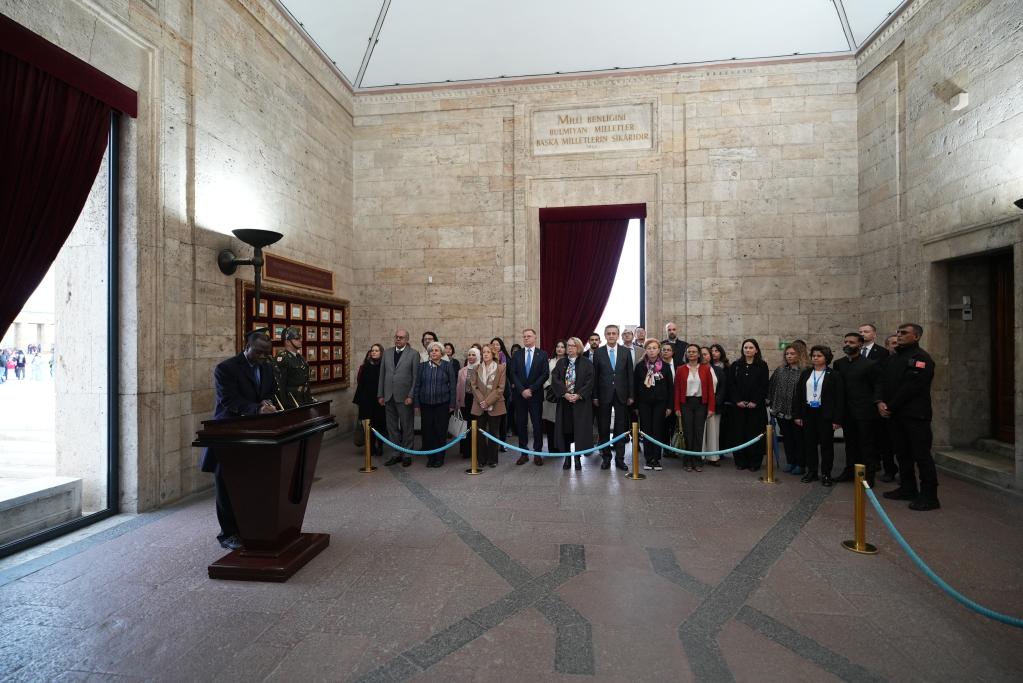
To mark the 80th anniversary of the United Nations, Dr. Babatunde Ahonsi, UN Resident Coordinator in Türkiye, led a delegation of UN Türkiye Country Team members and staff to Anıtkabir, the mausoleum of Mustafa Kemal Atatürk, founder and first President of the Republic of Türkiye.The ceremony began with the delegation’s procession along the Lion Road, followed by the laying of a wreath at Atatürk’s mausoleum and a moment of silence in tribute.In the Memorial Notebook housed in the Misak-ı Millî Tower, Dr. Ahonsi wrote the following message:Aziz Atatürk,On the 80th anniversary of the United Nations, we honor your vision of peace at home and in the world, and reaffirm our commitment to your enduring call for global solidarity.Your dedication to social progress, equality, and the welfare of all continues to inspire our work for sustainable development and for leaving no one behind. Guided by your legacy, we stand with the people of Türkiye in advancing a just and inclusive future for all.Atatürk’s vision of “peace at home, peace in the world” continues to resonate deeply with the mission and values of the United Nations, especially as the organization celebrates eight decades of promoting peace, dignity, and equality for all on a healthy planet.Note: Aziz means beloved, revered, honored, or esteemed. When used in memorial notes, it conveys deep respect and reverence, almost like saying “Honored Atatürk” or “Beloved Atatürk”.
1 of 5
Press Release
09 December 2025
Seven in ten women human rights defenders, activists and journalists report online violence
Geneva – 9 December 2025 – Online violence against women human rights defenders, activists and journalists has reached a tipping point, often fueling offline attacks, according to a new report released today, produced by the European Commission and UN Women’s ACT to End Violence against Women programme, in partnership with researchers from TheNerve, City St George’s, University of London and the International Center for Journalists, and in collaboration with UNESCO. Without strong countermeasures, online violence risks driving women out of digital spaces, undermining democracy and freedom of expression. The report, Tipping point: The chilling escalation of violence against women in the public sphere, shows that 70 per cent of surveyed women have experienced online violence in the course of their work. Furthermore, 41 per cent of respondents reported offline harm linked to online abuse. For women journalists, the link between online abuse and offline harm has become more concerning. In a 2020 global survey published by UNESCO, 20 per cent of women journalists associated the offline attacks or abuse they experienced with online violence. In the new 2025 survey – conducted by the same researchers and presented in this report – that share of journalists and media workers has more than doubled to 42 per cent.“These figures confirm that digital violence is not virtual – it’s real violence with real-world consequences”, said Sarah Hendricks, Director of Policy, Programme and Intergovernmental Division at UN Women. “Women who speak up for our human rights, report the news or lead social movements are being targeted with abuse designed to shame, silence and push them out of public debate. Increasingly, those attacks do not stop at the screen – they end at women’s front doors. We cannot allow online spaces to become platforms for intimidation that silence women and undermine democracy.”“This data shows that in the age of AI-fueled abuse and rising authoritarianism, online violence against women in the public sphere is increasing. But what’s truly disturbing is the evidence that women journalists’ experience of offline harm associated with online violence has more than doubled since 2020 – with 42 per cent of 2025 survey participants identifying this dangerous and potentially deadly trajectory”, said Professor Julie Posetti, lead researcher and Director of TheNerve’s Information Integrity Initiative. The report also finds that close to one in four surveyed women human rights defenders, activists and journalists have experienced AI-assisted online violence, such as deepfake imagery and manipulated content. Writers and public communicators (e.g., social media content creators and influencers) who focus on human rights issues face the highest exposure, at 30 per cent.The report comes as the world wraps up the 16 Days of Activism against Gender-Based Violence. This year’s campaign is dedicated to raising awareness about digital violence, with calls for stronger laws and policies to recognize technology-facilitated violence against women as a human rights violation; robust regulation and accountability for tech companies; safety protocols and support systems for women human rights defenders, activists, journalists; and investment in research and data to monitor trends, understand intersectional impacts, and inform evidence-based policy and practice. UN Women will close the 16 Days of Activism against Gender-Based Violence campaign with a corporate strategy to prevent and respond to technology-facilitated violence against women, focused on strengthening accountability, closing evidence and data gaps, accelerating prevention and survivor-centered responses, as well as building greater resilience and amplifying the voices of women’s rights movements and women leaders.For interviews, contact the UN Women media team on media.team@unwomen.orgAbout ACTThe Advocacy, Coalition Building and Transformative Feminist Action (ACT) programme, is a game-changing commitment between the European Commission and UN Women as co-leaders of the Action Coalition on Gender Based Violence (GBV), in collaboration with the UN Trust Fund to End Violence against Women. The ACT shared advocacy agenda is elevating the priorities and amplifying the voices of feminist women’s rights movements and providing a collaborative framework focused on common priorities, strategies and actions.About UN Women
UN Women exists to advance women’s rights, gender equality and the empowerment of all women and girls. As the lead UN entity on gender equality, we shift laws, institutions, social behaviours and services to close the gender gap and build an equal world for all women and girls. We keep the rights of women and girls at the centre of global progress – always, everywhere. Because gender equality is not just what we do. It is who we are.About the Information Integrity InitiativeThe Information Integrity Initiative is a new project of TheNerve, the digital forensics lab founded by Nobel Laureate Maria Ressa. It anchors action-oriented research at the intersection of gender, disinformation, freedom of expression and public interest media.
UN Women exists to advance women’s rights, gender equality and the empowerment of all women and girls. As the lead UN entity on gender equality, we shift laws, institutions, social behaviours and services to close the gender gap and build an equal world for all women and girls. We keep the rights of women and girls at the centre of global progress – always, everywhere. Because gender equality is not just what we do. It is who we are.About the Information Integrity InitiativeThe Information Integrity Initiative is a new project of TheNerve, the digital forensics lab founded by Nobel Laureate Maria Ressa. It anchors action-oriented research at the intersection of gender, disinformation, freedom of expression and public interest media.
1 of 5
Press Release
25 November 2025
United Nations, Femicide Report 2024 Every 10 Minutes, a Woman or Girl Is Killed
On the International Day for the Elimination of Violence Against Women, 25 November, the United Nations Office on Drugs and Crime (UNODC) and UN Women jointly released a global report emphasizing that violence against women and girls is entirely preventable, yet femicide rates remain alarmingly high.According to the report, in 2024, 50,000 women and girls were killed by an intimate partner or a family member. This figure represents approximately 60 per cent of all intentional femicides. In 2023, the number was 51,100. The observed decrease is attributed to inequalities or discrepancies in country-specific data and does not reflect a genuine reduction. Today, every 10 minutes, a woman or girl is killed by someone close to her.The report states that, on average, 137 women and girls killed every day by intimate partners or family members. In contrast, only 11 per cent of male homicides occur in private settings.Regional Overview: Africa Has the Highest Rate, Europe Remains at RiskIn 2024, Africa recorded the highest rate of intimate partner or family-related femicides, with 3 victims per 100,000 population. The Americas and Oceania follow at 1.5 and 1.4 victims per 100,000, respectively. While Asia (0.7 per 100,000) and Europe (0.5 per 100,000) reported lower rates compared to the global average, the proportion of women killed by intimate partners in Europe is striking: in 2024, 64 per cent of women killed in Europe were murdered by their intimate partners.Examples from Europe and Central Asia reveal that many women face digital forms of violence before being killed, such as catfishing, doxing, online defamation, and cross-platform harassment. Some women are killed shortly after the perpetrator is released from prison. According to UNFPA data, the situation in Türkiye is similarly concerning. One in four young internet users in Türkiye experiences digital violence, and women are 27 times more likely than men to be affected.Digital Violence Kills: Hate Online Harms OfflineThe report highlights that online violence is not merely a “virtual” threat; rather, it is a tangible form of violence that leaves women and girls highly vulnerable to physical abuse and homicide. Research from the United Kingdom indicates that 60 per cent of women killed in domestic settings were monitored online before their deaths. Women with high public profiles, such as journalists, politicians, and activists, are among the groups most exposed to digital violence. Globally, one in four women journalists and, in many regions, 1 in 3 to 4 women politicians report receiving online threats, including death threats. Digital technologies facilitate the spread of violence against women in virtual environments, and women and girls are sometimes killed as a result of images and videos shared online. In certain cases, these murders are even broadcast live on social media, revealing the direct link between digital violence and deadly real-world consequences.Women are exposed to numerous forms of technology-facilitated violence, including catfishing, doxing, cyberflashing, online defamation, cross-platform harassment, sealioning, sextortion, and the misuse of image-based content.The joint 16 Days of Activism campaign by UN Women and the United Nations Population Fund (UNFPA) this year is themed “End Digital Violence against Women and Girls. Full Stop!” highlighting the relationship between digital and physical violence.Statement from UN Women Türkiye Country Director Maryse Guimond“This report reminds us of a clear reality: femicide is not inevitable, it is preventable. Violence often begins in the digital sphere, continues through threats, pressure, and harassment, and, without timely intervention, ends in fatal outcomes. Everyone needs practical tools for online safety. Women and girls must know how to protect their accounts, recognize abusive behaviour, report incidents quickly, and support targeted individuals. To safeguard the right to life of every woman and girl, we must take early warning signs seriously and establish robust justice and effective protection mechanisms in both online and offline spaces.”Data-Driven Policy is EssentialThe report stresses that femicide data is underreported in many countries, resulting in invisibility that demands urgent action.UN Women and UNODC continue to work with countries to implement the international statistical framework adopted in 2022.The full report is available here: https://www.unwomen.org/en/digital-library/publications/2025/11/femicides-in-2024-global-estimates-of-intimate-partner-family-member-femicides
1 of 5
Press Release
15 October 2025
Statement: Rural women rising – shaping resilient futures with Beijing+30
On this International Day of Rural Women, we call for bold action to advance the equality, rights, and empowerment of women and girls living in rural settings. Every day, they feed communities, protect the environment, and power sustainable development. Investing in them is both an act of justice and a safeguard for our shared future.For generations, women in rural settings have driven collective movements for change: mobilizing communities, influencing policies, and championing vital issues such as climate justice. Their leadership continues to build bridges between local action and global progress, even as rural areas are hit hardest by extreme poverty and food insecurity, impacting women, youth, and Indigenous Peoples the most. If current trends continue, 351 million women and girls will still live in extreme poverty by 2030.Amid these challenges, Verene Ntakirutimana’s story from Rwanda demonstrates how empowering women in rural settings creates tangible, lasting change. With support from the Joint Programme on Rural Women’s Economic Empowerment, she transitioned from subsistence farming to a thriving small business. Her success shifted community attitudes: challenging stereotypes, promoting shared decision-making, and inspiring others to follow her example.This year’s theme ‘Rural Women Rising’ is both a tribute and a call to action. Advancing their livelihoods, leadership, rights, and resilience --as set out in the Beijing+30 Action Agenda-- is essential. Initiatives such as the International Year of Women Farmers in 2026 and the Inter-American Decade for the Rights of All Women, Adolescents and Girls in Rural Settings (2024–2034), as well as community movements like Women to Kilimanjaro, offer powerful opportunities to make their work visible, their voices heard, and their rights recognized.When rural women rise, fields flourish, families thrive, and societies transform, propelling us toward the vision of the Beijing Declaration and Platform for Action and the SDGs.
1 of 5
Press Release
08 October 2025
The girl I am, the change I lead – Girls on the frontlines of crisis
On this International Day of the Girl, we celebrate the courage and leadership of girls everywhere, especially those facing crisis and conflict. Girls like Sandra Patricia Aguilar Carabalí in northern Cauca, Colombia, are defying exclusion and leading efforts to protect land, peace, and their communities.Thirty years after the Beijing Declaration, we reaffirm that investing in girls’ rights is both a moral duty and a strategic choice. Progress has been made: adolescent motherhood has nearly halved, child marriage has declined, and many countries have outlawed discrimination and violence while expanding access to education and health. These advances show what is possible when governments and communities commit to girls’ rights.Yet, progress is fragile. 122 million girls are still out of school globally, nearly 1 in 5 young women aged 20–24 were first married before 18, and 50 million girls alive today have experienced sexual violence. Each year, four million girls undergo female genital mutilation (FGM), half before their fifth birthday. At the current pace, progress needs to be 27 times faster to end FGM by 2030.In 2024, 676 million women and girls lived near deadly conflict, facing disrupted education, violence, and barriers to health. The cost of inaction is immense, measured in lost lives and stalled futures.The Gender Snapshot 2025 presents clear evidence that investing in adolescent girls multiplies benefits for children, communities, and economies. In Africa alone, such investments could generate USD 2.4 trillion in new income by 2040. Every additional year of secondary education boosts a girl’s potential income by 10–20 per cent. Comprehensive action across social protection, education, the green economy, labour markets, innovation, and governance could lift 52 million additional women and girls out of extreme poverty by 2030.UN Women stands with girls everywhere—with every girl whose rights are threatened, whose voice is silenced, and whose leadership goes unrecognized.Thirty years ago, we promised girls equality. Today, we must deliver.
1 of 5
Press Release
01 May 2025
Türkiye’s human rights record to be examined by Universal Periodic Review
GENEVA (1 May 2025) – The human rights record of Türkiye will be examined by the United Nations Human Rights Council’s Universal Periodic Review (UPR) Working Group for the fourth time on Tuesday, 6 May 2025, in a meeting in Geneva that will be webcast live.Türkiye is one of 14 States to be reviewed by the UPR Working Group during its upcoming session from 28 April to 9 May 2025. The first, second and third UPR reviewsof Türkiye took place in May 2010, January 2015, and January 2020, respectively.The UPR Working Group is comprised of the 47 Member States of the Human Rights Council. However, each of the 193 UN Member States can participate in a country review.The documents on which the reviews are based are: 1) national report - information provided by the State under review; 2) information contained in the reports of independent human rights experts and groups, known as the special procedures, human rights treaty bodies, and other UN entities; 3) information provided by other stakeholders including national human rights institutions, regional organizations, and civil society groups.The three reports serving as the basis for the review of Türkiye on 6 May can be found here.Location: Room XX, Palais des Nations, Geneva.Time and date: 9:00 – 12:30, Tuesday, 6 May 2025 (GMT+2).The UPR is a peer review of the human rights records of all 193 UN Member States. Since its first meeting was held in April 2008, all 193 UN Member States have been reviewed thrice. During the fourth UPR cycle, States are again expected to spell out steps they have taken to implement recommendations posed during their previous reviews which they committed to follow up on and highlight recent human rights developments in the country. The delegation of Türkiye will be led by Mehmet Kemal Bozay, Ambassador, Deputy Minister of Foreign Affairs and Director for EU Affairs.The three country representatives serving as rapporteurs (“troika”) for the review of Türkiye are Côte D’ivoire, France and Japan.The webcast of the session will be at: https://webtv.un.org/en/asset/k1k/k1k23dwgn7 The list of speakers and all available statements to be delivered during the review of Türkiye will be posted on the UPR Extranet. The UPR Working Group is scheduled to adopt the recommendations made to Türkiye on Friday, 9 May 2025, between 16:00 and 18:00 (GMT+2). The State under review may wish to express its positions on recommendations posed to it during its review.// ENDS //For more information and media requests, please contact Pascal Sim, Media Officer, at simp@un.org, David Díaz Martín, Public Information Officer at david.diazmartin@un.org, and Matthew Brown, Public Information Officer, at Matthew.Brown@un.org To learn more about the Universal Periodic Review: www.ohchr.org/en/hr-bodies/upr/upr-main Sign up for the UN Human Rights Council Newsletter: https://mailchi.mp/a3a538479938/hrc-mailshot-to-ohchr-globalFollow us on social media:Facebook | X | YouTube | Instagram | LinkedIn
1 of 5
Latest Resources
1 / 11



Resources
25 May 2023
1 / 11